

TL;DR:
- Bankruptcy can stop foreclosure on every rental property you own and restructure the mortgages.
- Chapter 13 can cram down an underwater rental mortgage to the property’s value. Lenders on investment property don’t get the protection a primary-residence lender does.
- Subchapter V fits landlords running rentals as a business. Traditional Chapter 11 has no debt limit for larger portfolios.
- Rents pledged to your lender need its consent or a court order to spend. Properties held in an LLC need the LLC itself to file.
Owning a New Jersey rental property can build real wealth. But portfolio holders and individual investors may face sudden financial hardship. A long vacancy, a tenant who stops paying, a balloon payment, rising insurance on a rental, or a costly repair can leave an investor juggling several mortgages with no room for error.
Bankruptcy is not just a last resort for landlords. Used strategically, it can stop foreclosures, restructure mortgages, and protect the portfolio you spent years building.
Why Landlords Face Different Bankruptcy Rules
Investors run into issues that ordinary homeowners never see:
- Debt limits
Multiple mortgages can push your secured debt past what Chapter 13 allows.
- Rents as collateral
Many investment mortgages include an assignment of rents, which gives your lender rights to that income.
- Entity ownership
Properties held in an LLC belong to the LLC, not to you personally.
- Personal guarantees
You may be liable for a loan even when the LLC is the borrower.
Each of these affects which chapter you can use and what it can do for you.
Chapter 13 for Individual Landlords
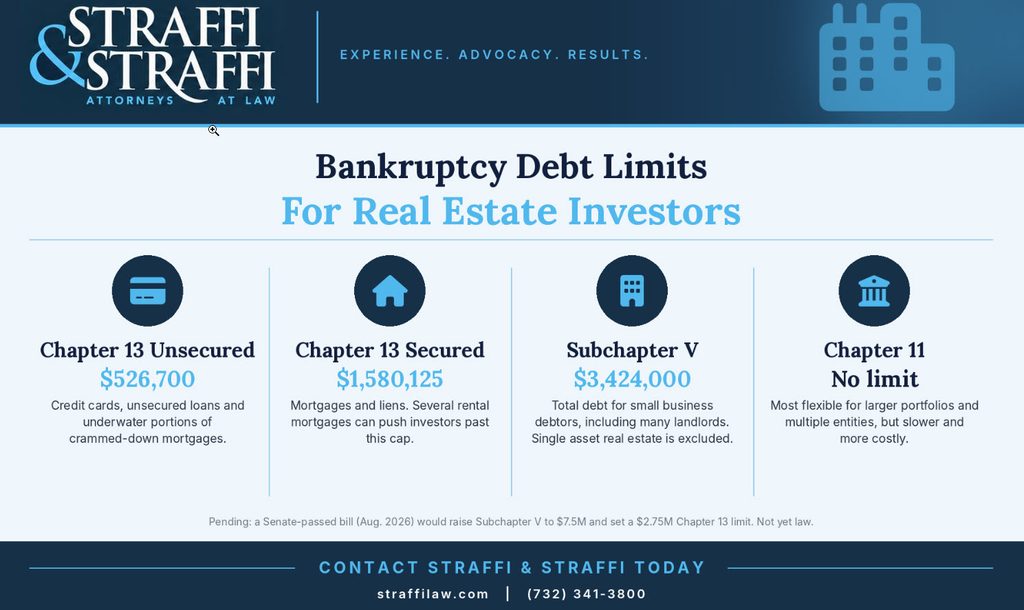
If you own rental property in your own name and your debts fall within the limits, Chapter 13 bankruptcy can be a powerful tool. As of April 2025, Chapter 13 is available to individuals with less than $1,580,125 in secured debt and $526,700 in unsecured debt.
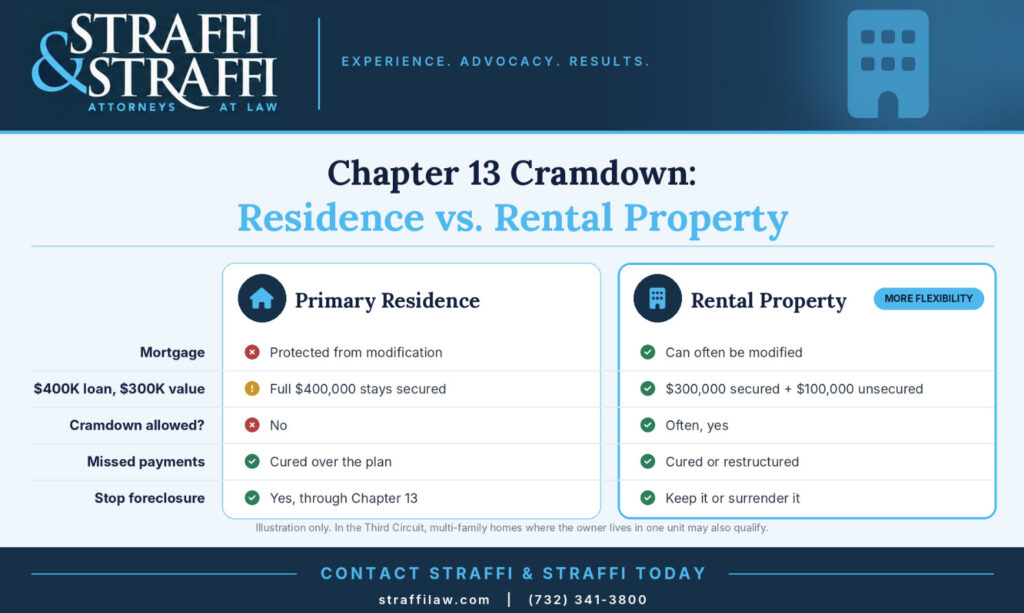
The biggest advantage for investors is how Chapter 13 treats rental mortgages. The Bankruptcy Code protects a lender on your primary residence from having its loan modified. That protection generally doesn’t extend to investment properties.
That means a Chapter 13 plan may be able to:
- Cram down an underwater rental mortgage to the property’s current value, treating the rest as unsecured debt
- Reduce the interest rate on the secured portion
- Stretch payments over the plan
- Surrender properties that no longer make sense while keeping the ones that do
There’s a New Jersey advantage, too. In the Third Circuit, which includes New Jersey, courts have allowed modification of a mortgage on a multi-family property even when the owner lives in one of the units.
Subchapter V for Landlords Running a Business
When debts exceed the Chapter 13 limits, or when rental properties are run as a business, Subchapter V of Chapter 11 may be the better route. It was designed to make reorganization faster and more affordable for small businesses.
As of 2026, the Subchapter V debt limit is $3,424,000. Key features include:
- No creditors’ committee in most cases
- Only the debtor can propose a plan
- Owners can often keep their equity without paying every creditor in full
- A Subchapter V trustee helps the parties reach a consensual plan
One important exception: a debtor whose primary activity is owning a single property that generates substantially all of its income (known as single asset real estate) generally cannot use Subchapter V.
Traditional Chapter 11 for Larger Portfolios
For investors with significant debt, several entities, or complex financing, traditional Chapter 11 has no debt limit. It’s more expensive and slower than Subchapter V, but it offers the most flexibility to restructure loans, sell properties in an orderly way, and negotiate with multiple lenders.
Can I Keep Collecting Rent During Bankruptcy?
Usually yes, but rent often still counts as your lender’s cash collateral. To use rents for taxes, insurance, repairs, and payroll, you generally need the lender’s consent or a court order. That typically means creating a budget and making protection payments to the lender. Handling this correctly at the start of a case is essential.
Your tenants’ leases remain in effect. Tenants keep paying rent, and you keep your obligations as a landlord.
What If My Properties Are Held in an LLC?
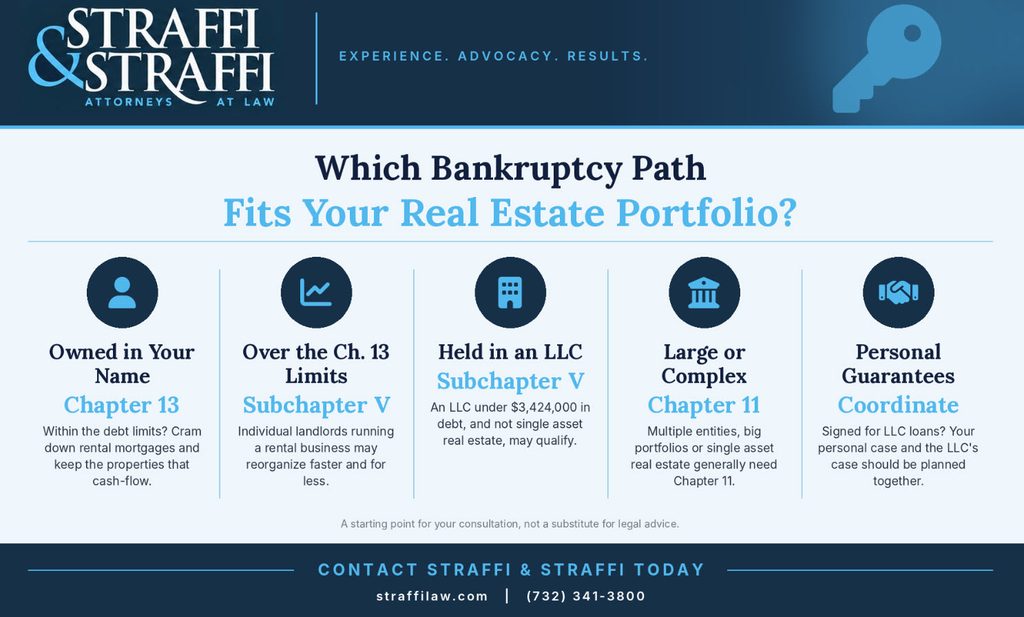
Your personal bankruptcy does not cover property owned by an LLC. If the LLC is in trouble, the LLC itself may need to file, often under Subchapter V or Chapter 11. If you personally guaranteed the LLC’s loans, your personal options may need to be coordinated with the company’s case.
Signs It’s Time to Talk to a Bankruptcy Attorney About Your Investment Portfolio
Waiting too long narrows your options. Consider a consultation if:
- A lender has filed a foreclosure complaint on any property
- You’re covering one property’s mortgage with another property’s rent
- A balloon payment or loan maturity is approaching, and refinancing isn’t available
- You’ve signed personal guarantees on struggling LLC loans
- Vacancies or unpaid rent have lasted more than a few months
- Property tax or municipal liens are piling up
Early advice gives you time to plan before a sheriff’s sale date forces a rushed filing.
Watch for Changes to the Debt Limits
Congress has passed the Bankruptcy Threshold Adjustment Act (H.R. 7730), sending the measure to the President to be signed into law. Once enacted, the legislation will permanently restore the Subchapter V small-business debt limit to $7.5 million and establish a unified Chapter 13 aggregate debt limit of $2.75 million (eliminating the separate secured and unsecured caps).
Because eligibility is determined by the law in effect on the date your petition is filed, ask your attorney about the bill’s current enactment status before you file. It could significantly expand the bankruptcy chapters and restructuring options available to your real estate portfolio.
Protect Your Portfolio with Straffi & Straffi


You’ve built a real estate portfolio through many years of hard work. Now, the right bankruptcy strategy can help safeguard your assets and secure your future.
Daniel Straffi, Jr. has represented individuals and businesses throughout Central and Southern New Jersey for more than 20 years. Schedule a free consultation or call (732) 341-3800 to review your range of filing options.
Answering Bankruptcy Questions for New Jersey Landlords and Real Estate Investors
Can I stop a foreclosure on a rental property?
Yes. Filing triggers the automatic stay, which pauses foreclosure on all your properties while the case is pending.
Can I evict a tenant while I’m in bankruptcy?
Generally, yes. Your own bankruptcy doesn’t stop you from enforcing leases, though it’s wise to coordinate with your attorney.
Do I have to keep every property?
No. You can keep properties that cash-flow and surrender ones that don’t, often with the remaining loan balance treated as unsecured debt.
Does a short-term or vacation rental count as investment property?
Usually, yes. Treatment depends on how the property is used, so a short-term rental used partly by your family needs careful analysis.
Can a cramdown apply to a home equity line on a rental?
Often, yes. A fully underwater junior lien on investment property may be treated as unsecured debt.
What happens to security deposits I’m holding?
Security deposits belong to your tenants under New Jersey law and must be protected and handled properly.
Will bankruptcy affect my ability to buy more property later?
Lenders will see the filing, but many investors rebuild credit and finance again within a few years.
Are property taxes and municipal liens discharged?
Generally, no. Tax liens stay with the property, though Chapter 13 can let you pay them over time.
Can my LLC use Chapter 13?
No. Chapter 13 is only for individuals. An LLC would use Chapter 11, Subchapter V, or Chapter 7.
What records should I bring to a consultation?
Leases, rent rolls, mortgage statements, tax returns, LLC documents, and any personal guarantees.


