If you are struggling with insurmountable debt, you already know the heavy emotional toll it takes. But when creditors escalate their collection efforts, the stress can become unbearable.
Relentless phone calls at home and work, intimidating letters, threats of lawsuits, and the devastating reality of wage garnishment can make it feel like there is no way out. Fortunately, the law provides a powerful mechanism to stop these aggressive tactics in their tracks through filing for bankruptcy.
This comprehensive guide explores exactly how filing for bankruptcy serves as a legal shield against creditor harassment and wage garnishment, giving you the breathing room you need to rebuild your life.
The Power of the Automatic Stay
The most immediate and profound protection bankruptcy offers is the automatic stay. Outlined in Section 362 of the United States Bankruptcy Code, the automatic stay is a federal injunction that goes into effect the second you file your bankruptcy petition with the court.
This legal provision effectively freezes all collection activities. It acts as an impenetrable wall between you and your creditors. The law prohibits creditors and third-party collection agencies from contacting you, seizing your property, or continuing any lawsuits against you.
If a creditor knowingly violates the automatic stay, they can be held in contempt of court and forced to pay severe financial penalties, including your attorney’s fees.
Putting an End to Creditor Harassment
Creditor harassment is often the leading catalyst that drives people to seek bankruptcy protection. Collection agencies are notorious for using aggressive tactics to squeeze payments out of individuals who simply do not have the funds. They may call multiple times a day, contact your relatives, or even call your workplace, which can jeopardize your employment.
Once you file for bankruptcy, the automatic stay makes all of these actions illegal. Creditors must deal directly with your bankruptcy attorney and the bankruptcy court. The phone calls stop, the threatening letters cease, and the constant anxiety of checking the mailbox or answering the phone is finally alleviated.
How Bankruptcy Protects You From Creditor Harassment
| Harassment Tactic | Before Filing for Bankruptcy | After Filing for Bankruptcy (Under Automatic Stay) |
| Phone Calls | Creditors can call daily, often using aggressive or manipulative language. | Completely stopped. Creditors are legally barred from calling you at home or on your cell phone. |
| Workplace Contact | Collectors may call your employer or your direct work line, putting your job at risk. | Completely stopped. Creditors cannot contact you at work or speak to your employer about your debt. |
| Written Notices | Constant influx of final notices, collection letters, and legal threats in the mail. | Completely stopped. All communication must be directed to your bankruptcy attorney or the court. |
| Family & Friends | Collectors may attempt to contact your relatives or neighbors to pressure you. | Completely stopped. Third-party contact regarding debt collection is strictly prohibited. |
| Collection Lawsuits | Creditors can file civil lawsuits to obtain judgments against you. | Halted immediately. All pending lawsuits are frozen, and new suits cannot be filed for dischargeable debts. |
Can Bankruptcy Stop Wage Garnishment?
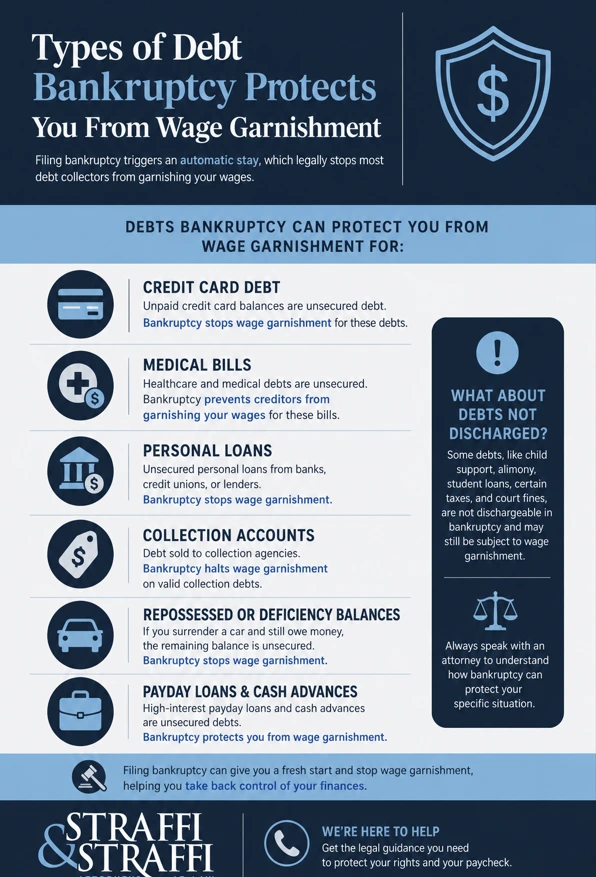
In New Jersey, if a creditor sues you for an unpaid debt and wins a judgment, they can petition the court for a wage execution order, commonly known as wage garnishment. This allows the creditor to take money directly from your paycheck before you even see it.
Under New Jersey law, creditors can generally garnish up to 10% of your gross income or 25% of your disposable income, whichever is less.
Losing a significant portion of your paycheck can make it impossible to cover basic living expenses like rent, groceries, and utilities, leading to a vicious cycle of further debt.
Filing for bankruptcy stops wage garnishment immediately. As soon as your petition is filed, your attorney or the bankruptcy court will notify your employer’s payroll department.
The garnishment must cease by the next pay period. Depending on the chapter of bankruptcy you file, the underlying debt that caused the garnishment (such as credit card debt or medical bills) may be entirely discharged, meaning the creditor can never garnish your wages for that debt again.
How Bankruptcy Protects You From Wage Garnishment
| Garnishment Stage / Type | How Bankruptcy Intervenes | Long-Term Outcome |
| Pending Lawsuit | The automatic stay stops the lawsuit before the creditor can obtain a judgment to garnish wages. | The underlying debt is usually discharged or reorganized, preventing future garnishment. |
| Active Wage Garnishment | The automatic stay requires your employer to immediately stop deducting funds from your paycheck. | Once the bankruptcy is complete, the garnishment order is permanently voided for dischargeable debts. |
| Credit Card & Medical Debt | Stops garnishment instantly upon filing. | These unsecured debts are fully discharged in Chapter 7 or partially paid/discharged in Chapter 13. |
| Bank Account Levies | Freezes any pending bank levies, protecting your remaining funds from being seized. | Funds protected by New Jersey or federal bankruptcy exemptions remain yours to keep. |
| Child Support/Alimony Arrears | Note: The automatic stay does not stop garnishment for ongoing domestic support obligations. | Chapter 13 allows you to structure arrears into a manageable 3- to 5-year repayment plan. |
The Role of Your Bankruptcy Attorneys in Stopping Creditor Harassment
Executing Error-Free Filings
Your lawyer precisely prepares and files your petition with the NJ Bankruptcy Court, ensuring no technical errors delay the immediate activation of the federal automatic stay.
Enforcing Federal Compliance
Rather than just hoping debt collectors stop, your attorney actively enforces the stay by officially notifying all agencies and pursuing severe court sanctions against any lender who continues harassing phone calls or wage garnishments.
Timing Emergency Asset Protection
By navigating strict state-specific sheriff sale and repossession timelines, an experienced NJ attorney can file emergency petitions at the exact moment necessary to freeze pending home foreclosures and vehicle losses.
Intercepting Predatory Tactics
Acting as an impenetrable legal barrier, your counsel will use the Fair Debt Collection Practices Act (FDCPA) to legally take over all creditor correspondence, completely insulating you from further intimidation.
Stop Creditor Harassment and Take Back Control of Your Finances

New Jersey Bankruptcy Attorney Daniel Straffi, Jr.
You do not have to live in constant fear of the phone ringing or dreading wage garnishment on your next paycheck. The law provides a clear path to debt relief, and the team at Straffi & Straffi, Attorneys at Law, will guide you every step of the way. Our attorneys offer compassionate, judgment-free legal counsel tailored to your unique situation.
Stop the harassment. Stop the garnishment. Call us now at (732) 518-9057 or schedule your bankruptcy consultation.