
When debt reaches a breaking point, it can feel like there is no way out. Creditors are calling, mortgage payments are falling behind, and the financial pressure is mounting by the day.
For many New Jersey residents, Chapter 13 bankruptcy is not a last resort — it is a deliberate, strategic tool that allows individuals with regular income to restructure their debts, protect their property, and rebuild on solid ground.
This guide explains the step-by-step process of filing for Chapter 13 bankruptcy in New Jersey to help you make a confident, informed decision about your financial future.
What Is Chapter 13 Bankruptcy?
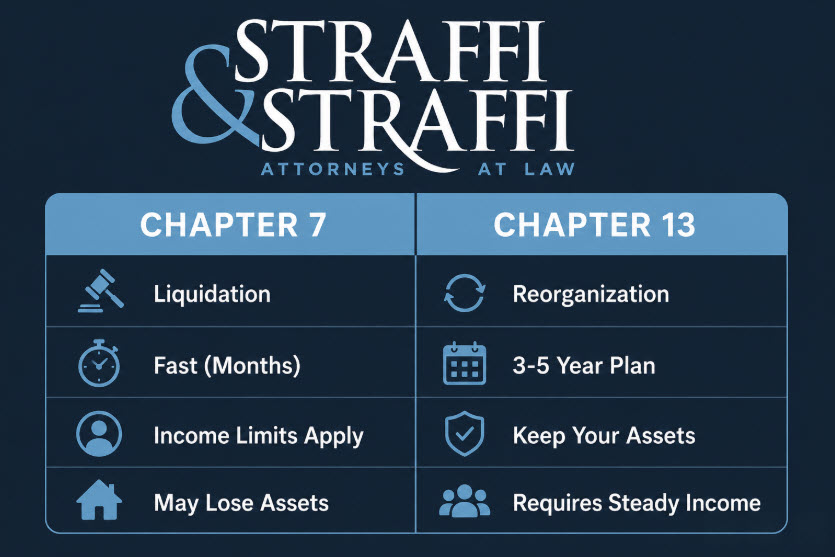
Chapter 13 is often called “reorganization bankruptcy” because, rather than liquidating your assets to satisfy creditors, it allows you to reorganize your debts into a structured repayment plan lasting three to five years. At the end of that plan, remaining eligible dischargeable debts are wiped out. Filing for Chapter 13 helps you keep your home, your car, and your other property, while stopping collection calls, lawsuits, and wage garnishments from the moment you file.
This stands in direct contrast to Chapter 7, which requires surrendering non-exempt assets and is better suited to individuals with limited income or minimal assets. Chapter 13 is the right option for those with a steady paycheck who need breathing room to handle their current debts.
Do I Qualify for Chapter 13 Bankruptcy in New Jersey?
Not everyone is eligible for Chapter 13, and the court requires that applicants meet several specific criteria:
- Sufficient, Regular Income
You must have a consistent source of income, whether from traditional employment, self-employment, rental income, or other means, that can cover both your basic living expenses and your proposed bankruptcy plan payments.
- Up-to-Date Tax Filings
You must be fully current on your federal and state tax returns for the previous four years.
- Debts Below Statutory Limits
Both your secured debts (such as mortgages and car loans) and your unsecured debts (such as credit cards and medical bills) must fall below the federal thresholds established by the bankruptcy code.
If your debts exceed the current federal limits, Chapter 13 will not be an option, and Chapter 11 bankruptcy may be a more appropriate path.
Because these rules are strict, it is best to have an experienced New Jersey bankruptcy attorney evaluate your financial picture to determine the best next step.
The Step-by-Step Chapter 13 Filing Process in Detail
Step 1: Consult With a New Jersey Bankruptcy Attorney
An attorney will review your income, debts, assets, and financial goals to determine whether Chapter 13 is your best option and what your repayment plan might realistically look like. This initial evaluation with a Chapter 13 bankruptcy attorney also helps you avoid costly mistakes in the filing process that could jeopardize your case.
The attorney will gather documentation, including recent pay stubs, two years of tax returns, bank statements, a list of creditors, and a detailed inventory of your assets and liabilities. The more complete and accurate this information is, the smoother the entire process will be.
Step 2: Complete the Required Credit Counseling
Federal bankruptcy law requires that anyone filing for bankruptcy complete an approved credit counseling course within 180 days before filing. The course typically takes one to two hours and can be completed online or over the phone through an approved provider. You will receive a certificate of completion that must be included with your bankruptcy petition.
After your case is filed, you will also be required to complete a debtor education course before receiving your final discharge. These two requirements together are designed to ensure filers understand their options and have the tools to manage their finances going forward.
Step 3: File the Bankruptcy Petition With the New Jersey Bankruptcy Court
Once your paperwork is in order, your attorney files your bankruptcy petition with the U.S. Bankruptcy Court for the District of New Jersey. This petition includes your list of assets and liabilities, your current monthly income and expenses, a statement of financial affairs, and schedules detailing all of your creditors and the amounts owed.
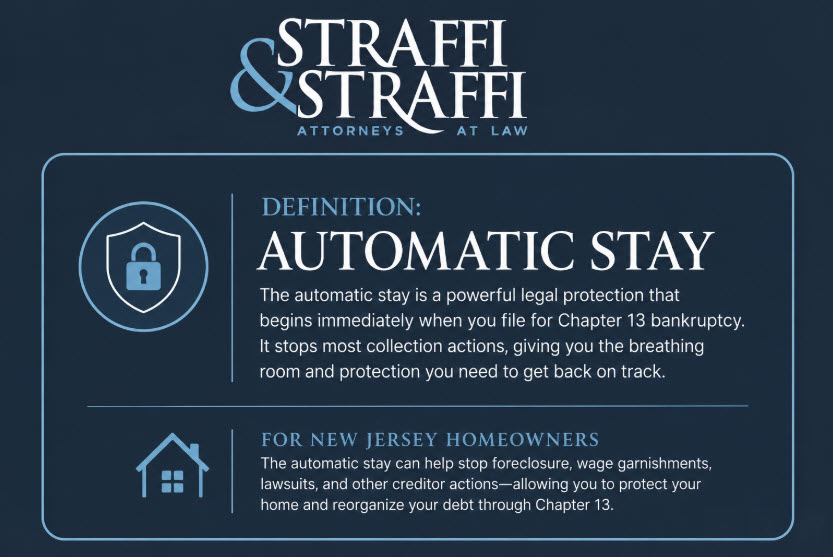
The moment the petition is filed, an automatic stay goes into effect. This is one of the most powerful and immediate benefits of filing. The automatic stay halts all collection actions against you, including foreclosure proceedings, repossession efforts, wage garnishments, and creditor calls, giving you immediate relief while the court process unfolds.
Step 4: Propose Your Chapter 13 Repayment Plan
Within 14 days of filing your petition, you must submit a proposed repayment plan to the court. This plan details how your disposable income will be distributed among your creditors over the three- to five-year repayment period.
Priority debts such as back taxes, child support, and mortgage arrears must be paid in full through the plan. Unsecured debts such as credit card payments and medical bills are often paid only partially, with the remainder discharged upon plan completion.
Your plan payment goes directly to a court-appointed Chapter 13 trustee, who then distributes the funds to your creditors according to the plan terms. You must begin making payments to the trustee within 30 days of filing, even before the court formally approves the plan.
Step 5: Attend the Meeting of Creditors (341 Meeting)
Approximately 21 to 50 days after filing, you will attend a brief hearing known as the Meeting of Creditors, or 341 Meeting. This is not a courtroom proceeding before a judge. It’s conducted by your bankruptcy trustee, who will ask you to confirm the accuracy of your petition and answer questions about your financial situation under oath.
Creditors are permitted to attend and ask questions, though in practice they rarely do. The meeting typically lasts only 10 to 20 minutes when you have a well-prepared attorney by your side. Your attorney will accompany you and help ensure the proceeding goes smoothly.
Step 6: Attend the Plan Confirmation Hearing
Following the 341 Meeting, the bankruptcy court schedules a confirmation hearing to determine whether your proposed repayment plan meets all legal requirements. The judge evaluates whether the plan was proposed in good faith, whether it is financially feasible, and whether it satisfies the applicable rules regarding priority and secured debts.
Creditors who object to the plan’s terms may raise their concerns at this hearing.
Many Chapter 13 plans are confirmed with minimal complications, particularly when prepared and presented by an experienced bankruptcy attorney. If modifications are needed, your attorney can negotiate and revise the plan accordingly before final approval.
Step 7: Follow the Plan and Make Monthly Payments
Once confirmed, your repayment plan becomes a legally binding contract. Your obligation for the next three to five years is straightforward: make your monthly trustee payments on time and comply with all requirements of the court. You must also continue filing your annual tax returns and provide copies to the trustee. You cannot take on new significant debt without court approval during this period.
If your financial circumstances change, for example, you lose your job, face a medical emergency, or experience another hardship, your attorney can petition the court to modify your plan.
In some cases, a hardship discharge may be available if you cannot complete the plan through no fault of your own.
Step 8: Receive Your Discharge
After completing every payment required under your plan, you will receive a discharge order from the bankruptcy court. This order permanently eliminates your remaining eligible unsecured debts, including credit cards, personal loans, and medical bills. Certain debts, such as student loans, recent taxes, and domestic support obligations, cannot be discharged and will survive bankruptcy.
To receive your discharge, you must also complete the post-filing debtor education course and certify that you have no outstanding domestic support obligations.
Once the discharge is granted, you are legally free from those eliminated debts and can begin the process of rebuilding your credit and financial life.
How Chapter 13 Specifically Protects New Jersey Homeowners
One of the most powerful benefits of Chapter 13 in New Jersey is its ability to stop foreclosure and help homeowners catch up on missed mortgage payments.
The automatic stay immediately halts any pending foreclosure action. Through your repayment plan, you can spread those mortgage arrears over three to five years, bringing your loan current without having to pay everything at once.
Chapter 13 can be a lifeline for New Jersey homeowners who are behind on their mortgage. It also allows filers to remove wholly unsecured second mortgages or home equity lines of credit in certain situations, potentially reducing the total debt secured by the home.
Talk to Straffi & Straffi Attorneys at Law — Your New Jersey Chapter 13 Legal Team
Whether you are facing foreclosure, wage garnishment, or need a structured path out of overwhelming debt, we are here to help you take the next step.
Led by father-and-son team Daniel Straffi, Sr. and Daniel Straffi, Jr., with over 40 years of combined legal experience, Straffi & Straffi has guided countless New Jersey families and individuals through the bankruptcy process with compassion and clarity. Our team serves clients throughout Ocean County, Monmouth County, Burlington County, Middlesex County, and all of Central and Southern New Jersey.
Financial relief may be closer than you think. Call (732) 518-9057 to speak with our experienced Chapter 13 bankruptcy attorneys today or schedule your free initial Chapter 13 bankruptcy consultation.
Frequently Asked Questions About Chapter 13 Bankruptcy in New Jersey
What is the difference between Chapter 7 and Chapter 13 bankruptcy?
Chapter 7 quickly liquidates non-exempt assets to discharge debts, typically within months. Chapter 13 allows you to keep property while repaying debts through a structured three-to-five-year plan. Chapter 13 is better suited for people with regular income who want to protect their home or other assets.
How long does Chapter 13 bankruptcy take in New Jersey?
Chapter 13 involves a court-approved repayment plan lasting either three years (if your income is below the state median) or five years (if it is above). After completing the plan, you receive your discharge, making the total process three to five years from filing.
Will I lose my house if I file for Chapter 13?
No. Protecting your home is one of Chapter 13’s primary advantages. Filing triggers an automatic stay that immediately halts foreclosure. Through your repayment plan, you can catch up on missed mortgage payments over time and keep your home as long as you remain current going forward.
Can Chapter 13 stop wage garnishment?
Yes. The automatic stay takes effect the moment you file, immediately stopping wage garnishment. Under 11 U.S.C. § 362, creditors are legally prohibited from continuing garnishment actions while your bankruptcy case is active, giving you relief from the very first day of filing.
What debts cannot be discharged in Chapter 13 bankruptcy?
Student loans, most recent tax debts, child support, alimony, criminal fines, and debts arising from fraud or willful misconduct typically survive bankruptcy and cannot be discharged. Your attorney can review your specific debts and advise which obligations will remain after your plan is completed.
Do I have to go to court for Chapter 13 bankruptcy?
You must attend the 341 Meeting of Creditors and your plan confirmation hearing, but these are generally brief and straightforward with proper legal representation.
How much does it cost to file Chapter 13 in New Jersey?
The current federal court filing fee for Chapter 13 is $313. Attorney fees vary based on the complexity of your case. Straffi & Straffi offers free consultations and can discuss payment arrangements, as attorney fees are often incorporated into the Chapter 13 plan itself.
What happens if I miss a payment during my Chapter 13 plan?
Missing payments can result in your case being dismissed, eliminating the protection of the automatic stay. If you experience a financial hardship, contact your attorney immediately. The court may allow plan modifications to reduce payments or extend the plan term under qualifying circumstances.
Can I file Chapter 13 if I have already filed for bankruptcy before?
Yes, but timing restrictions apply. If you received a Chapter 7 discharge, you must wait four years before filing Chapter 13. If you previously had a Chapter 13 discharge, you must wait two years. If a prior case was dismissed, different rules apply. An attorney can confirm your eligibility.
Will Chapter 13 bankruptcy ruin my credit?
Chapter 13 does impact your credit and remains on your credit report for seven years from the filing date. However, many filers begin rebuilding credit during and after the plan by making consistent payments. Over time, responsible financial behavior can significantly improve your credit score.


